
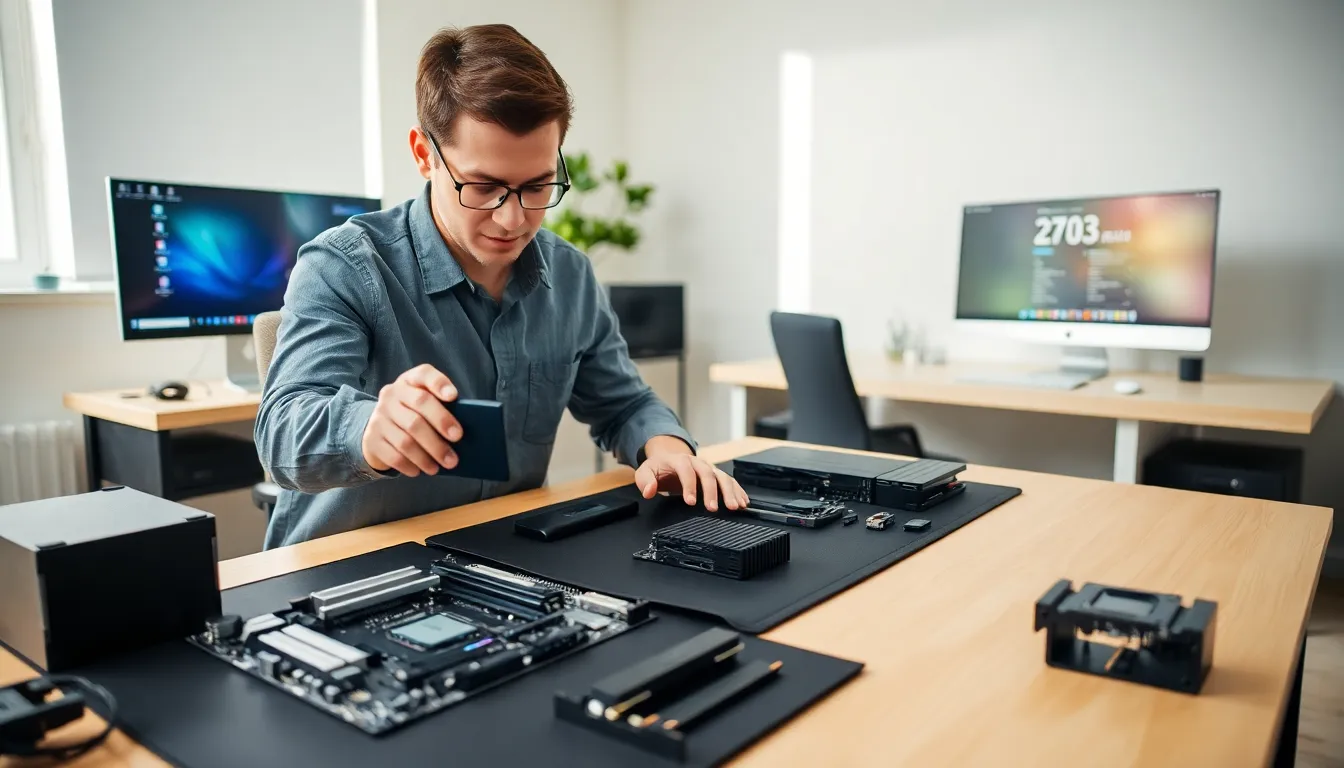
Learning how to hardware starts with understanding what’s actually inside your computer. Whether someone wants to build their first PC, upgrade an aging system, or simply troubleshoot a problem, knowing the basics of hardware makes all the difference. Computer hardware includes every physical component that makes a machine work, from the processor that handles calculations to the storage drive that holds files.
This guide breaks down essential hardware components, explains how to choose the right parts, and covers basic maintenance tips. By the end, readers will have a solid foundation for making smarter decisions about their computer hardware.
Table of Contents
ToggleKey Takeaways
- Learning how to hardware starts with understanding core components like the CPU, RAM, storage drives, motherboard, PSU, and GPU.
- Choose hardware based on your intended use—basic tasks need modest specs, while gaming and video editing demand more powerful components.
- Always verify compatibility between parts, as CPUs require specific motherboard sockets and GPUs need adequate power supply wattage.
- Regular maintenance like cleaning dust, monitoring temperatures, and updating drivers extends hardware lifespan and prevents damage.
- Plan for future upgrades by selecting motherboards with extra RAM slots and cases with room for additional storage drives.
- Back up important data regularly since storage drive failure is inevitable—use external drives or cloud storage for protection.
What Is Computer Hardware?
Computer hardware refers to any physical component inside or connected to a computer. This includes internal parts like the motherboard and processor, as well as external devices like monitors and keyboards. Hardware works together with software to perform tasks, but hardware is the tangible equipment users can touch and see.
Think of hardware as the body and software as the brain. The body (hardware) executes physical actions, while the brain (software) provides instructions. Without proper hardware, software has nothing to run on.
Hardware falls into two main categories:
- Internal hardware: Components installed inside the computer case, such as the CPU, RAM, and storage drives
- External hardware: Peripherals connected from outside, including mice, printers, and speakers
Understanding how to hardware means recognizing what each component does and how they interact. A processor might be fast, but it won’t perform well if paired with insufficient RAM. Every piece of hardware affects overall system performance.
Essential Hardware Components Every Computer Needs
Every computer relies on a core set of hardware components. Here’s what each one does:
Central Processing Unit (CPU)
The CPU acts as the computer’s brain. It processes instructions from programs and handles calculations. Modern CPUs from Intel and AMD offer multiple cores, allowing them to handle several tasks at once. A faster CPU means quicker program execution and better multitasking.
Random Access Memory (RAM)
RAM provides temporary storage for data the CPU needs right now. More RAM lets a computer run more programs simultaneously without slowing down. Most users need at least 8GB of RAM, while gamers and professionals often benefit from 16GB or more.
Storage Drives
Storage drives hold all files, programs, and the operating system. Two main types exist:
- Hard Disk Drives (HDDs): Traditional spinning disks that offer large capacities at lower prices
- Solid State Drives (SSDs): Faster drives with no moving parts, improving boot times and file access
Many users combine both: an SSD for the operating system and frequently used programs, plus an HDD for bulk storage.
Motherboard
The motherboard connects all hardware components. It contains slots for the CPU, RAM, and expansion cards. Choosing the right motherboard determines which other hardware components work with the system.
Power Supply Unit (PSU)
The PSU converts electricity from the wall outlet into power the computer can use. A quality PSU protects hardware from electrical damage and provides stable power delivery. Wattage requirements depend on the other hardware installed.
Graphics Processing Unit (GPU)
The GPU handles visual output. Integrated graphics work fine for basic tasks, but dedicated graphics cards from NVIDIA or AMD are essential for gaming, video editing, and 3D rendering.
How to Choose the Right Hardware for Your Needs
Selecting hardware depends entirely on intended use. Someone building a basic office computer has different needs than someone assembling a gaming rig. Here’s how to approach hardware selection:
Define the Purpose
Start by listing primary tasks. Web browsing and document editing require modest hardware. Video editing and gaming demand more powerful components. Being honest about actual needs prevents overspending.
Set a Budget
Hardware prices range from budget-friendly to extremely expensive. Allocate funds based on priorities. A gamer might spend more on the GPU, while a video editor might prioritize RAM and storage speed.
Check Compatibility
Not all hardware works together. CPUs require specific motherboard sockets. RAM must match the motherboard’s supported type and speed. Graphics cards need adequate PSU wattage. Always verify compatibility before purchasing.
Consider Future Upgrades
Choosing hardware that allows future upgrades saves money long-term. A motherboard with extra RAM slots or a case with room for additional drives provides flexibility. Learning how to hardware includes planning for tomorrow, not just today.
Read Reviews and Benchmarks
Real-world performance often differs from marketing claims. Independent reviews and benchmark tests reveal how hardware actually performs under various conditions. Sites like Tom’s Hardware and AnandTech offer reliable information.
Basic Hardware Maintenance Tips
Proper maintenance extends hardware lifespan and keeps systems running smoothly. These simple practices make a real difference:
Keep It Clean
Dust accumulates inside computer cases and clogs cooling systems. Compressed air removes dust from fans, heatsinks, and vents. Cleaning every few months prevents overheating and potential hardware damage.
Monitor Temperatures
Heat kills hardware over time. Free software like HWMonitor tracks CPU and GPU temperatures. If components run hot consistently, consider improving airflow or adding cooling solutions.
Update Drivers Regularly
Drivers help the operating system communicate with hardware. Outdated drivers can cause performance issues or instability. Manufacturers release updates that fix bugs and improve compatibility.
Handle Components Carefully
Static electricity damages sensitive hardware components. Touch a grounded metal object before handling internal parts. Hold components by their edges and avoid touching circuits directly.
Back Up Important Data
Storage drives eventually fail, it’s a matter of when, not if. Regular backups protect important files from hardware failure. External drives and cloud storage both work well for this purpose.


